Healing Modality
Sound Healing
Singing bowls and tones that shift brainwaves and release tension.
Why It Works
Sound moves through the body as vibration, and different frequencies interact with tissue, fluid, and the nervous system in measurable ways. Specific sound frequencies entrain the brain into alpha and theta wave states associated with deep meditation, accelerated healing, and emotional processing. The vibrations from instruments like singing bowls also create a form of internal massage at the cellular level. This is why people who have never meditated a day in their life leave a sound bath feeling the deepest peace they have ever felt.
What is SOUND HEALING?
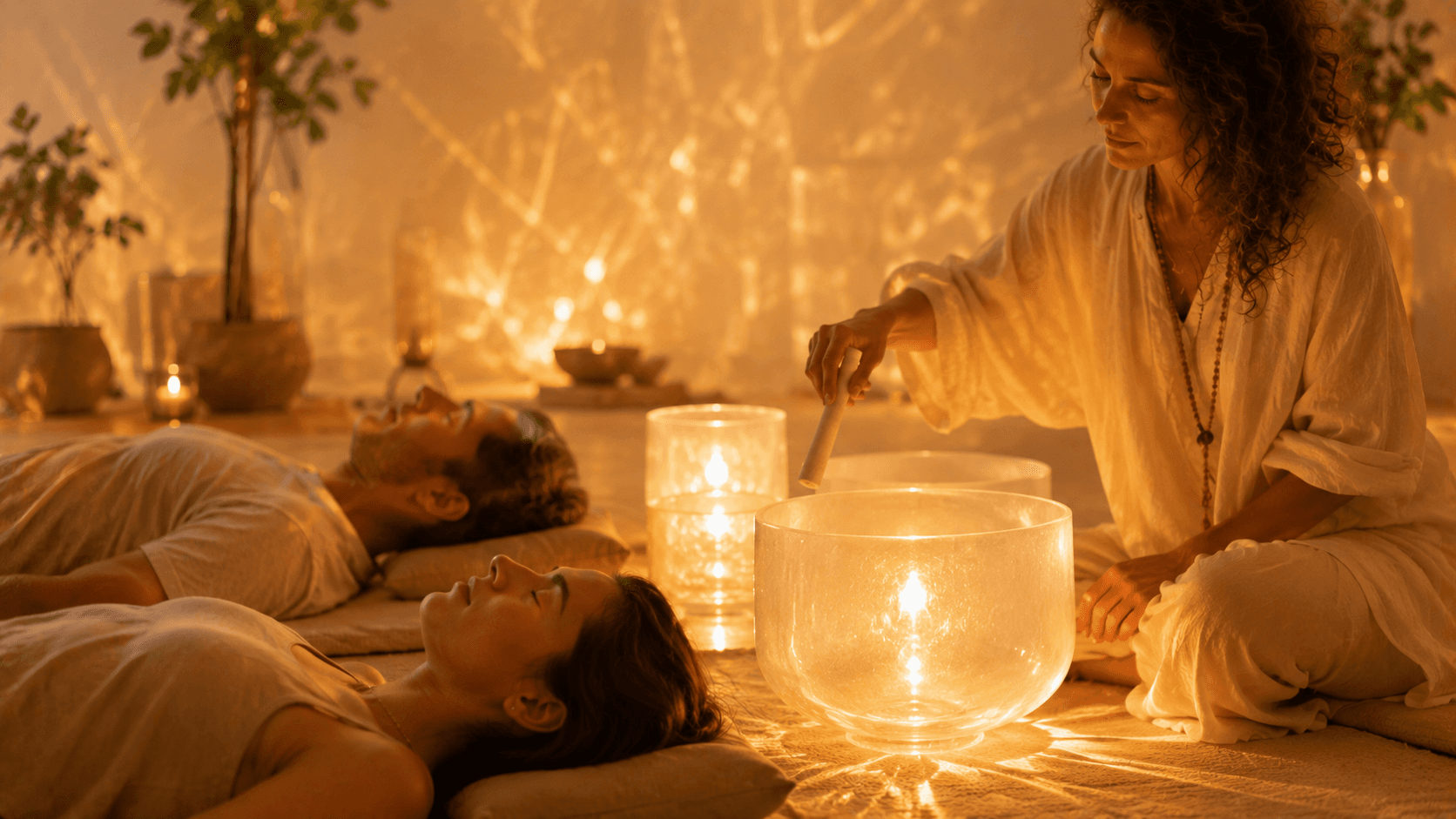
Sound healing is a therapeutic practice that uses acoustic vibrations from instruments including Tibetan and crystal singing bowls, gongs, tuning forks, and the human voice to promote physical, emotional, and spiritual wellbeing. Practitioners are trained in the therapeutic application of specific instruments and frequencies for healing purposes. Sessions range from individual appointments to group sound baths where multiple participants receive the treatment simultaneously.
What to Expect
You lie comfortably on a mat or massage table, fully clothed, while the practitioner plays instruments around and sometimes directly on your body. The sounds wash over and through you in waves. Some people experience tingling, a floating sensation, emotional releases, or vivid mental imagery. Others simply fall into a deep dreamlike state. Sessions run 30 to 90 minutes. Most people feel profoundly calm afterward, and sleep quality often improves noticeably that night.
Key Benefits
- ✓Shifts brainwaves into deep meditative states
- ✓Dramatically reduces stress and anxiety
- ✓Improves sleep quality and ease of falling asleep
- ✓Releases held emotional tension and trauma
- ✓Reduces blood pressure and heart rate
- ✓Eases chronic pain through vibrational entrainment
- ✓Enhances creativity and mental clarity
- ✓Supports spiritual practice and inner exploration
Conditions It Helps
Frequently Asked Questions
Preparation & Arrival
How should I prepare for a sound healing session?
Wear comfortable, loose clothing you can lie in for an extended period. Layers are helpful since body temperature often drops during deep relaxation. Avoid heavy meals beforehand. Arrive a few minutes early to settle in and let go of the mental noise of your day before the session begins.
Do I need any musical background or experience?
None at all. You are the receiver, not the performer. No knowledge of music, sound, or meditation is required. Simply lying down and letting the sound wash over you is the entire practice.
What should I bring?
Nothing is required but some people bring a small pillow or blanket for extra comfort. Eye masks can also deepen the experience by blocking out visual stimulation.
During the Session
What will I hear and feel?
The practitioner will play instruments including singing bowls, gongs, tuning forks, or chimes in patterns designed to guide your nervous system into progressively deeper states of relaxation. You may feel the vibrations physically moving through your body. Some people experience tingling, warmth, a floating sensation, or vivid imagery. Others simply drift into a deeply restful state.
What if my mind keeps wandering?
That is completely normal, especially in your first session. The sound itself will gently pull your attention back without any effort on your part. You do not need to meditate, concentrate, or do anything at all. Simply receive.
What if I fall asleep?
It is welcomed and common. The therapeutic effects of the sound frequencies continue whether you are awake or asleep. Many practitioners consider deep sleep during a session a sign of profound receptivity.
Aftercare & Results
How will I feel after my session?
Most people feel profoundly calm, spacious, and present. Some feel a gentle emotional tenderness as held tension releases. Sleep quality often improves noticeably the night of a session. Drink water, avoid stimulants, and give yourself a quiet evening if you can.
How often should I go?
For stress management and general wellbeing, once or twice a month is wonderful. For more intensive emotional or physical support, weekly sessions allow the shifts to build cumulatively. Many people attend group sound baths regularly and see individual practitioners for deeper personalized work.
Etiquette & Safety
Is sound healing safe if I have a pacemaker or metal implants?
Consult your physician before participating if you have a pacemaker since certain frequencies and vibrations may potentially interfere with electronic devices. Metal implants are generally not a concern for instruments played around the body rather than directly on it, but always disclose medical devices to your practitioner.
What is the difference between a sound bath and a private session?
A sound bath is a group experience where multiple people lie in a shared space while the practitioner plays instruments around the room. A private session is one-on-one with instruments played specifically for your needs, often closer to and sometimes directly on the body. Both are valuable for different purposes.