Healing Modality
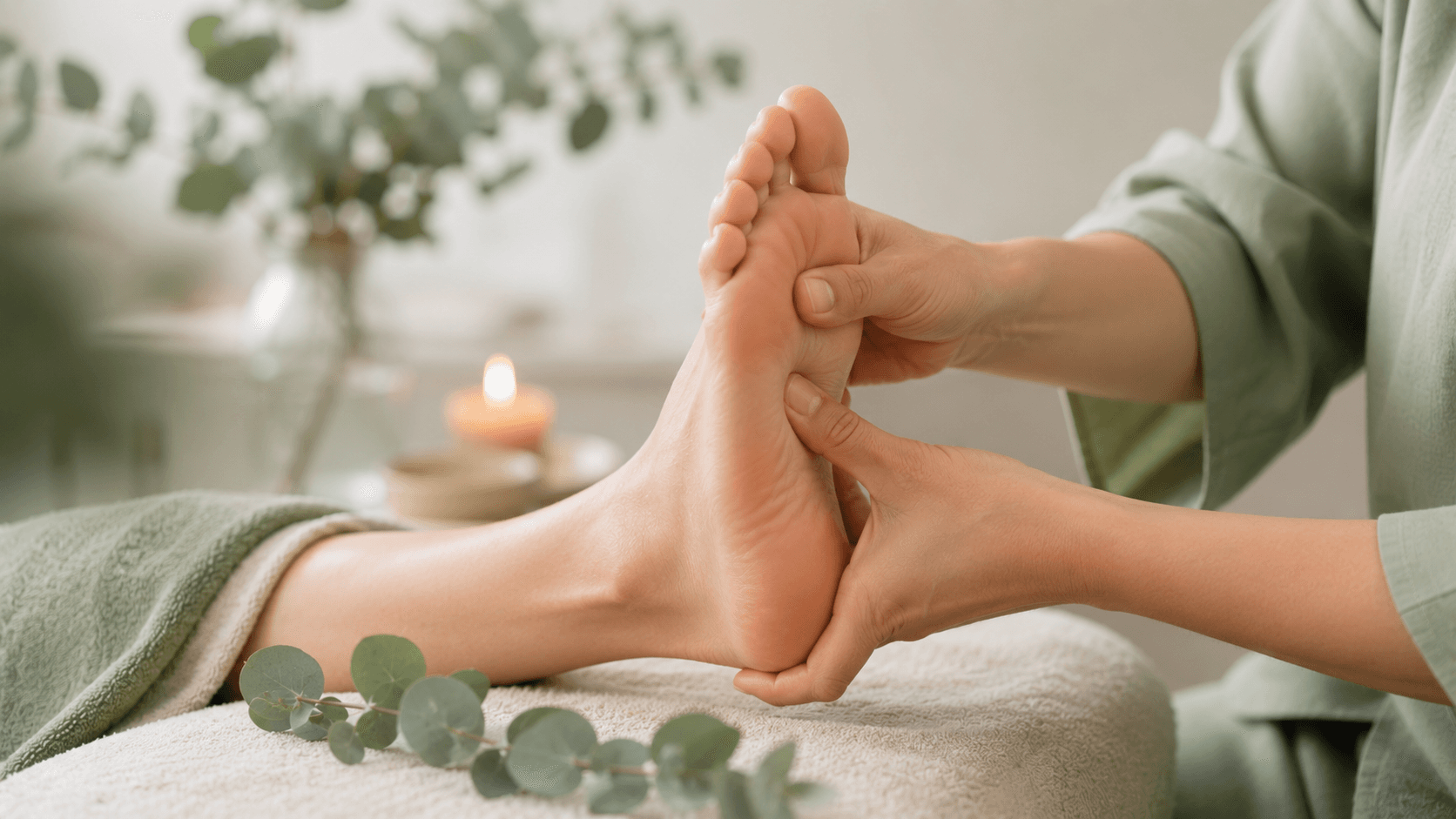
Reflexology
Foot and hand pressure points that correspond to organs and systems.
Why It Works
The feet contain over 7,000 nerve endings, many of which connect to organ systems throughout the body via the peripheral nervous system. Applying precise pressure to reflex zones triggers neurological responses in corresponding body systems, promotes circulation, and activates the parasympathetic nervous system. Research has shown reflexology can measurably reduce anxiety, lower blood pressure, and improve sleep quality through systemic neurological pathways. This is why people who came in for foot pain leave feeling like their whole system just exhaled.
What is REFLEXOLOGY?
Reflexology is a therapeutic practice based on the principle that specific points on the feet, hands, and ears correspond to organs, glands, and systems throughout the body. The modern Western model was developed by Eunice Ingham in the 1930s and is now practiced worldwide. Certified reflexologists complete specialized training in reflex zone mapping and therapeutic pressure techniques. No oils or clothing removal beyond socks and shoes is required.
What to Expect
You sit or recline comfortably while the practitioner works systematically through the reflex map of both feet using thumb and finger pressure. The sensation is firm but should not be painful. Most clients experience deep relaxation and many fall asleep. Areas corresponding to stressed body systems may feel more sensitive. Sessions typically run 45 to 60 minutes. You may notice improvements in digestion, sleep, or energy levels in the days that follow.
Key Benefits
- ✓Induces profound whole-body relaxation
- ✓Improves circulation in feet and lower limbs
- ✓Reduces tension and chronic stress
- ✓Supports digestive health and regularity
- ✓Relieves PMS and menstrual discomfort
- ✓Improves sleep quality
- ✓Eases plantar fasciitis and foot pain
- ✓Complements cancer care and palliative treatment
Conditions It Helps
Frequently Asked Questions
Preparation & Arrival
How should I prepare for my reflexology session?
Remove nail polish from your toenails if possible since the therapist works on the feet and clean nails make the session more comfortable for both of you. Wash your feet before arriving if you can. Wear comfortable, easy-to-remove socks and avoid tight footwear that might leave your feet compressed.
Do I need to remove any clothing?
Only your socks and shoes. Reflexology requires no disrobing and is one of the most accessible bodywork modalities for people who are uncomfortable with undressing.
What if my feet are ticklish?
Reflexology uses firm, targeted pressure rather than light stroking, which typically does not trigger the tickle response. Most people who consider themselves very ticklish find reflexology completely comfortable once the session begins.
During the Session
Will it hurt?
The pressure should feel firm and therapeutic but not painful. Areas corresponding to stressed or imbalanced body systems can feel more tender than others. This sensitivity is useful diagnostic information and your therapist will always work within your comfort level. If something is too intense, speak up immediately.
What will my reflexologist be doing exactly?
They will work systematically through a precise map of reflex zones on both feet, using thumb-walking techniques and targeted pressure to stimulate points corresponding to organs, glands, and body systems. The session is methodical and covers the entire foot including the top, sides, and heel as well as the ankles.
Can I talk during my session?
Yes though many people prefer quiet relaxation. The session is yours and you can choose how much you engage. Always speak up if anything needs adjustment.
Aftercare & Results
How will I feel after my session?
Most people feel deeply relaxed and sometimes a little drowsy. Some experience temporary detox-like symptoms such as increased urination, mild fatigue, or emotional sensitivity as the body processes the stimulation. These pass quickly and are considered a positive sign that the session activated the body's natural clearing processes.
How many sessions do I need?
Many people feel significant benefits after a single session. For chronic conditions a series of 6 weekly sessions is a common starting protocol. Monthly maintenance sessions work well for ongoing wellness and stress management.
When should I avoid reflexology?
Avoid reflexology if you have active foot injuries, open wounds, blood clots in the legs, or are in the first trimester of pregnancy. Always disclose medical conditions before your session so your therapist can adapt the approach safely.
Etiquette & Safety
Is reflexology the same as a foot massage?
No. While both involve working with the feet, reflexology uses a precise anatomical map of reflex zones and specific therapeutic pressure techniques with the intention of affecting body systems beyond the foot. A foot massage focuses on relaxing the muscles and tissue of the foot itself.
Should I tip my reflexologist?
In a spa setting 15 to 20 percent is standard. Independent practitioners appreciate tips but they are not universally expected. A genuine review and referral are also a meaningful way to show appreciation.