Healing Modality
Pilates
Core-focused movement that builds strength, posture, and flexibility.
Why It Works
Most exercise systems train the body's superficial muscles, the ones you can see. Pilates targets the deep stabilizing muscles of the spine, pelvis, and core that most people never consciously activate. When these deep muscles are weak or poorly coordinated, the body compensates by overloading superficial muscles and joints, leading to chronic pain, poor posture, and injury. By rebuilding this deep foundation first, Pilates corrects the root cause of many common pain patterns. This is why people who have lived with chronic pain for years finally understand what it feels like to move without it.
What is PILATES?
Pilates is a system of low-impact, precision-based exercises developed by Joseph Pilates in the early 20th century. It emphasizes breath, core engagement, and controlled movement to strengthen the body from the inside out. Certified Pilates instructors complete 450 to 900 hours of training and work with clients ranging from complete beginners and post-surgical patients to elite athletes and professional dancers.
What to Expect
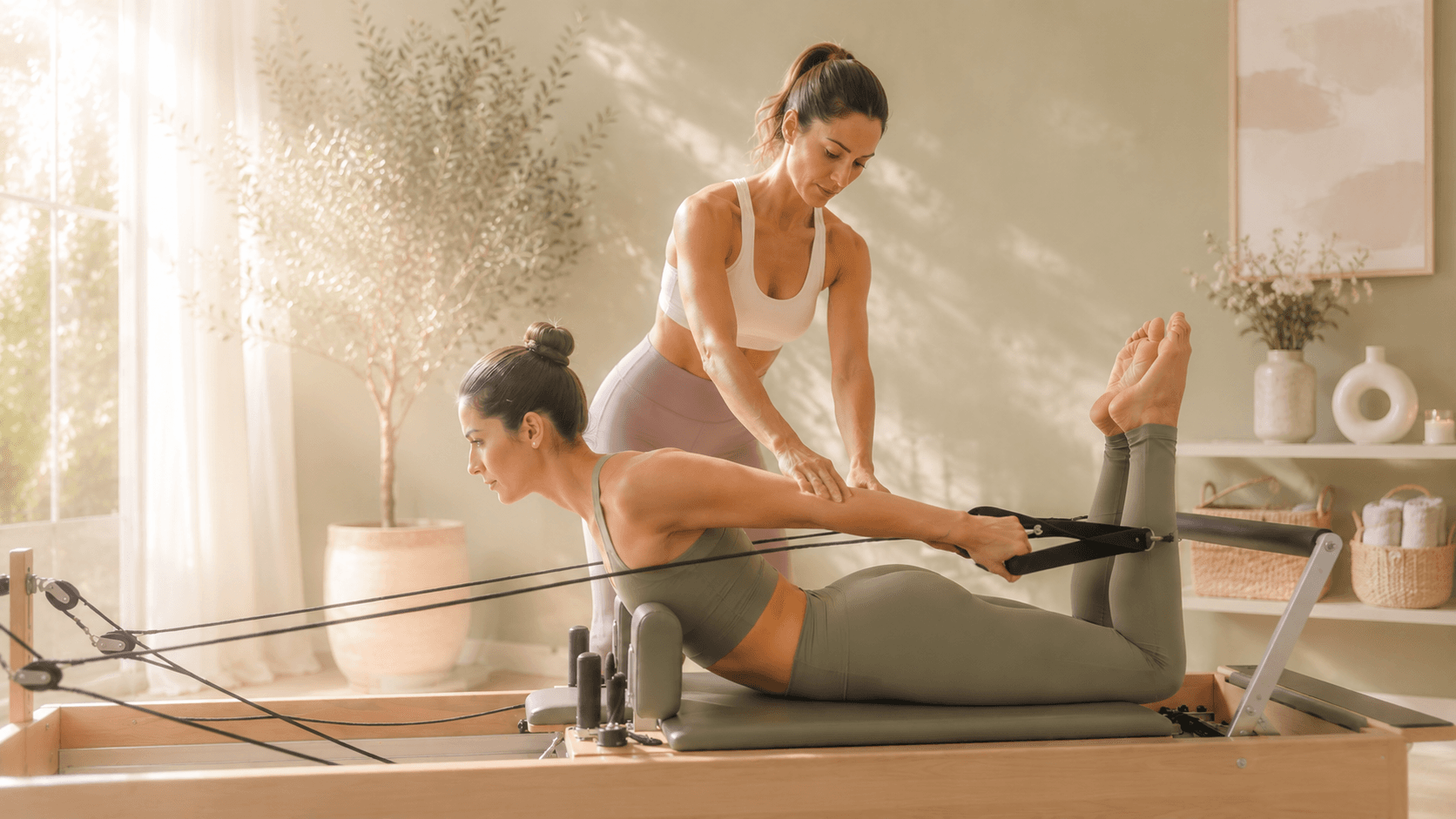
Sessions take place on a mat or on specialized equipment including the Reformer, a spring-resistance apparatus that provides both support and challenge. Your instructor will assess your movement patterns and tailor every exercise to your current level. Sessions run 50 to 60 minutes. Beginners often remark that they feel muscles they never knew they had. With consistent practice most people notice improvements in posture, pain levels, and overall movement quality within 8 to 10 sessions.
Key Benefits
- ✓Builds deep core strength and spinal stability
- ✓Dramatically improves posture and alignment
- ✓Increases flexibility without stressing joints
- ✓Develops body awareness and proprioception
- ✓Rehabilitates injuries with low joint impact
- ✓Improves balance and coordination
- ✓Enhances athletic performance and movement efficiency
- ✓Reduces stress through mindful movement practice
Conditions It Helps
Frequently Asked Questions
Preparation & Arrival
What should I wear?
Form-fitting workout clothes that allow you and your instructor to see your alignment. Avoid baggy clothing that obscures your posture. Grip socks are required on the Reformer at most studios and are available for purchase if you do not have them.
Do I need any prior fitness experience?
None. Pilates is genuinely appropriate for complete beginners and is one of the safest ways to begin building fitness from zero. Your instructor will start with foundational work and progress at a pace appropriate to your body.
Should I eat before my session?
Have a light meal or snack about two hours before. Pilates requires core activation and abdominal work, so arriving very full is uncomfortable. Avoid arriving hungry as well since sustained concentration and physical effort require stable blood sugar.
During the Session
How is a Pilates session different from a gym workout?
Pilates focuses on the quality of movement rather than the quantity of repetitions or the amount of weight lifted. Every exercise emphasizes precise alignment, breath coordination, and deep muscular engagement. You will likely do fewer repetitions than in a typical gym workout but find them significantly more challenging when performed with full attention.
Will I use the Reformer machine?
In many Pilates studios yes, especially in private sessions. The Reformer provides spring resistance that can make exercises easier or harder and assists proper form. Mat Pilates uses only bodyweight and is equally valid. Your instructor will guide you on what equipment is appropriate for your level.
What if I have back pain or a recent injury?
Tell your instructor before you begin and at the start of every session. Many people begin Pilates specifically to address back pain and Pilates has strong research support for spine rehabilitation. Your instructor will modify all exercises accordingly.
Aftercare & Results
Will I be sore after my first session?
Many first-time Pilates clients are surprised to feel muscles the next day that they did not know they had, particularly deep core and hip stabilizers. This soreness is normal and usually mild. It decreases significantly after the first few sessions.
How often should I practice to see results?
Two to three sessions per week produces the most significant and lasting results. Many clients supplement private or group Reformer sessions with mat practice at home. Even one session per week produces cumulative improvement over time.
How long until I notice a difference in my body?
Joseph Pilates famously said you will feel different in 10 sessions, look different in 20, and have a whole new body in 30. Most clients notice improvements in posture, core awareness, and pain levels within 6 to 8 consistent sessions.
Etiquette & Safety
Is Pilates safe during pregnancy?
Prenatal Pilates is wonderful for maintaining core strength, relieving back pain, and preparing the body for labor and delivery. However, work with an instructor specifically certified in prenatal Pilates who will adapt the exercises for each trimester and post-delivery recovery.
What is the difference between mat Pilates and Reformer Pilates?
Mat Pilates uses bodyweight exercises on a mat and is highly accessible and portable. Reformer Pilates uses a spring-resistance apparatus that can make exercises easier by providing assistance or harder by increasing resistance, allowing more nuanced progression. Both are effective and complementary.